Queering Valluvar’s Desire

Nominal congress, biting the sides, pressing outside and inside, kissing, rubbing, sucking a mango fruit and finally swallowing it up- these are eight things to be followed by a man while having oral sex with another man according to Vatsyayana’s Kamasutra. There are several such ancient Indian texts that bring historical queerness to light and expound on the physicality of the sex we practice. But can any such ancient work articulate the emotionality of such sex? Can such work also find a queer meaning to it? The answer can be surprisingly the same work that our Finance Minister has been quoting in her budget presentations since 2019, the Thirukkural.
Thirukkural is part of the later Sangam texts that can be dated from 300 BCE to the 5th century CE. This seminal Tamil work hosts 1330 short couplets and has been the flag-bearer of Tamil literature, celebrated for its timeless wisdom and universality. These couplets are divided into three sections: Morality, Materialism, and Desire. Of these three sections, Desire is often overlooked sister by the scholars and educationists of the Tamil populace. Why? Is it because Valluvar speaks of something that might not be considered a Tamilian value in the current ethos, or because people are uncomfortable reading or listening about desire from a text better known for its take on ethics, governance, love, and social conduct? This particular purist Tamilian populace cannot, after all, dismiss the Desire section as misinterpretation or ‘modern’ in nature, for desire is an essential part of Tamil life and is inseverable from Agam (interior life), ergo an integral part of Thirukkural. Mind you, Valluvar doesn’t deal with desire in a superficial manner: he delves into the depths of this emotion, ranging from the pleasure derived from sex to the subtleties of sulking with the lover.
So, why a queer interpretation of the couples from Valluvar’s Desire section? Historically, the Thirukkural has been used as a powerful tool to assert a cultural identity for various purposes, such as its use in the Dravidian movement to promote an indigenous and ancient Tamil ethical value system. More recently, modern feminist poets such as Meena Kandasamy have also reclaimed the Kural, interpreting it through a lens of gender equality and women empowerment. Inspired by this work, and keeping with the spirit of reclamation, I feel it is also imperative for our queer community to reclaim certain aspects of Thirukkural; the Desire section (Kaamatthuppaal) in particular discusses the beauty of desiring—to desire and be desired—themes that our queer community finds resonance with. While much of this part of the Kural explicitly references a ‘he’ or a ‘she,’ many couplets transcend the gender and sexuality of the desirer, creating space for queer interpretations.
Finally, as a Tamil queer man and someone who is no stranger to desire, I feel I have a rightful claim to the universality of Valluvar’s vision of love. If a man from the 1st century BCE could embody such fluid perspectives in his poetry, what stops us from interpreting his gaze through a queer lens today? So, below, I explore a selection of Kurals that I have found, that appeal to a queer sensibility in their celebration of sensuality, desire, and love.
Shame is taught to us from childhood, and this society doesn’t let us forget even for a second to feel shameful of our desires and to guilt-trip the self. But Valluvar essentially put these ‘fools’ in their place in Renouncing Shame (நாணுத்துறவுரைத்தல்), as he says,
Kural 1138:
நிறையரியர் மன்அளியர் என்னாது காமம்
மறையிறந்து மன்று படும்.
‘This person lacks self-control,’
‘This person lacks great love,
Desire does not weigh such thoughts.
Even when hidden, it manifests publicly.
Kural 1140:
யாம்கண்ணின் காண நகுப அறிவில்லார்
யாம்பட்ட தாம்படா ஆறு.
They mock me to my face:
the fools who have never undergone what I have
And for those who conquer this shame, Valluvar’s couplets also capture the desire for sex. In Longing for Sex (புணர்ச்சிவிதும்பல்), he says,
Kural 1281:
உள்ளக் களித்தலும் காண மகிழ்தலும்
கள்ளுக்கில் காமத்திற் குண்டு.
Not wine
but it is sex that gives
sheer delight at the thought
and such pleasure at sight.
Valluvar also has some advice for us when it comes to sex. In The Pleasure of Sex (புணர்ச்சிமகிழ்தல்), he says,
Kural 1109:
ஊடல் உணர்தல் புணர்தல் இவைகாமம்
கூடியார் பெற்ற பயன்.
Quarrel. Make love. Reconcile.
These are the lovers’ rewards.
Even wet dreams find a place in Valluvar’s The Solace of Dreams (கனவுநிலையுரைத்தல்)
Kural 1214:
கனவினான் உண்டாகும் காமம் நனவினான்
நல்காரை நாடித் தரற்கு.
The sex taking place in my dreams, fetches me
the lover I miss when I’m awake
One couplet from Yearning (அவர்வயின்விதும்பல்) talks about the intense waiting to rejoin the loved one in bed
Kural 1266:
வருகமன் கொண்கன் ஒருநாள் பருகுவன்
பைதல்நோய் எல்லாம் கெட.
One day, my man will return—I shall drink,
I shall devour and enjoy him, until all my lovesickness is destroyed.
While another couplet in Inability to Bear Separation (பிரிவாற்றாமை) voices the anguish of those who found love and are unable to bear the separation from their lover,
Kural 1156:
பிரிவுரைக்கும் வன்கண்ணர் ஆயின் அரிதவர்
நல்குவர் என்னும் நசை.
He is so cruel,
he tells me he is leaving.
And yet, I feel special
that he is in love with me.
We also hear of the anguish that heartbreak brings upon us. In A Lament for My Eyes (கண்விதுப்பழிதல்),
Kural 1174:
பெயலாற்றா நீருலந்த உண்கண் உயலாற்றா
உய்வில்நோய் என்கண் நிறுத்து.
My eyes have dried up,
they no longer shed tears,
there is no escape for me,
from this incurable disease
Are these not the same emotions and vulnerabilities that we share amongst us all? Does this not speak of a secular love that transcends gender and sexuality? We can clearly see that for Valluvar, desire is an intrinsic part of being human. His couplets implore us to explore, comprehend, and embrace our emotions without guilt or shame. Valluvar therefore provides us with something that can go beyond the binary perspectives of gender, and his celebration of desire in its abstract but very real form makes these couplets a rich source for queer interpretations. By queering the Thirukkural, we not only reclaim our right to exist and love within its universal truths but also find a place for ourselves among the Kural’s timeless legacy.
__________________________________________________________________________________________
Notes:
1. We acknowledge with gratitude the English translations from Meena Kandasamy’s Tirukkural: The Book of Desire (India Hamish Hamilton) ISBN: 9780670097081. Published: Jan/2023
2. Excerpts from this piece were shared by the author at Orinam’s Quilt (Pride edition) on June 14, 2025, at the Goethe-Institut, Chennai.
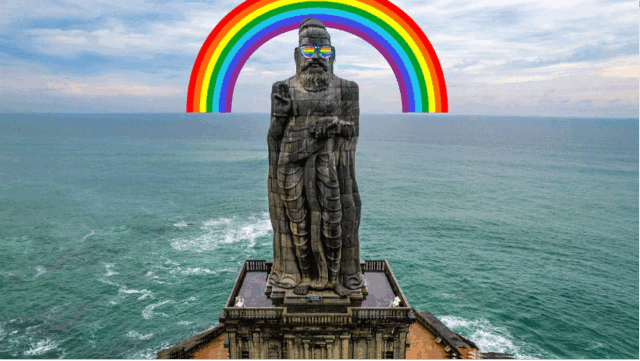
3. The thumbnail was generated using Gemini AI.